How ChatGPT can help with your business marketing (and it’s not what you think)
Artificial intelligence has changed marketing faster than almost any tool we’ve seen before. You can open ChatGPT, type a sentence or two, and seconds later have a blog post, social media captions, an email campaign and even ideas for images.
It sounds like a marketer’s dream.
But there’s a problem.
If everyone is using the same tools, asking similar questions and accepting the first thing AI produces, we’re heading towards a very beige internet. The image below has at least five dead giveaways that it was AI generated, including the very obvious Gemini watermark and the flowy “hand written” fonts.
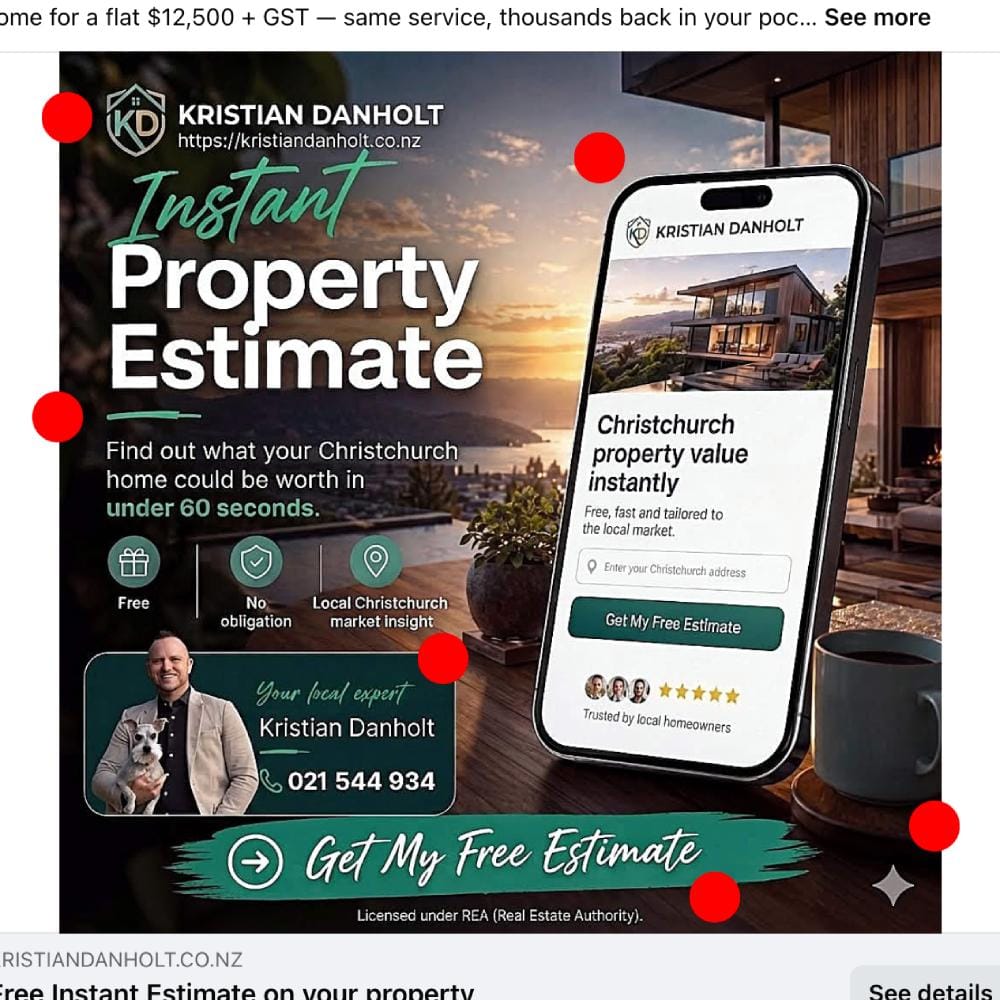
And people can see it.
You’ve probably seen the LinkedIn post that sounds strangely familiar. The Instagram caption full of generic inspiration. The glossy AI-generated image featuring people with suspiciously perfect teeth, sitting in an office that looks like it exists nowhere on Earth.
AI-generated marketing is becoming easier to spot because so much of it looks and sounds exactly the same.
That’s where the real opportunity lies.
Remember the Purple Cow?
Marketing author Seth Godin introduced the idea of the “Purple Cow” in his famous book of the same name.
Imagine driving past a field full of cows. At first, you might notice them. But after seeing hundreds of brown cows, they all start blending together.
Now imagine one of them is purple.
You’d notice it.
You might point it out.
You might even tell someone about it later.
That’s the basic idea behind remarkable marketing. In a crowded marketplace, being perfectly competent is often not enough. The things that get attention are the things worth talking about.
And this is exactly where AI creates an interesting problem.
AI is incredibly good at creating the average.
Ask it to write a social media post promoting your business and it will happily give you something polished, professional and completely safe. Ask it to generate an image for your campaign and you might get something visually impressive.
But will it be memorable?
Will it sound like you?
Will someone stop scrolling?
That depends on what you give the AI to work with.
Don’t automate the thinking
One of the biggest mistakes businesses make with ChatGPT is expecting it to do the thinking for them.
They open the tool and type:
“Write me a Facebook post promoting my business.”
The result might be fine.
And that’s the problem.
Fine is often invisible.
The better approach is to use AI after you’ve done the interesting bit.
Sit down first. Brainstorm. Throw ideas around. Think about your customers, your industry and the things everyone else is doing. Ask yourself what people in your market expect to see, then consider doing something different.
Maybe your first draft is messy. Maybe it’s just a page of rough notes. Maybe it contains half-finished sentences and ideas that need work.
That’s okay.
This is where ChatGPT becomes genuinely useful.
Give it your rough draft and ask it to improve the structure, tighten the writing or make the message clearer. Then take the result and give it one final human edit.
That last step matters.
Remove phrases you would never say. Put your personality back in. Add a specific story, opinion, joke or observation that only someone from your business could make.
Think of AI as an incredibly fast assistant, not the creative director.
Better prompts create better results
The same principle applies to AI-generated images.
If you ask an AI image tool:
“Create a social media image promoting a real estate business.”
You’ll probably get something that looks like every other AI-generated real estate image online.
Instead, start with an actual idea.
What are you trying to communicate? What would make someone stop scrolling? Is there an unexpected visual metaphor you could use? Is there something distinctive about your brand, location or audience?
Then build those details into your prompt.
For example, instead of asking for “a professional business image”, give the AI creative direction:
- Describe the specific concept or story.
- Explain the emotion you want the image to create.
- Mention what you don’t want.
- Avoid generic stock-photo compositions.
- Ask for unusual perspectives, environments or visual metaphors.
- Give the tool references to your actual brand personality.
You can even tell ChatGPT to challenge your first idea:
“Give me five unexpected visual concepts for this campaign. Avoid clichés, stock-photo style imagery, obvious industry symbols and anything that looks like a typical AI-generated social media ad.”
That changes the role of AI completely.
You’re not asking it to press the “make marketing” button.
You’re using it to help you explore ideas faster.
Use the machine, but keep the human
ChatGPT, Claude, Grok, Gemini and the growing number of AI tools available to marketers are incredibly useful.
They can help you overcome a blank page. They can tidy rough writing. They can summarise research, generate alternatives, organise ideas and save hours on repetitive tasks.
That’s the real value.
The goal shouldn’t be to remove humans from marketing. It should be to remove the boring parts of the process so humans have more time to think, create and make better decisions.
Because your experience is still valuable.
Your opinions are valuable.
Your knowledge of your customers is valuable.
The strange idea you had in the shower that probably wouldn’t occur to an AI trained on billions of existing examples? That might be your Purple Cow.
So by all means, use ChatGPT.
Use Claude. Use Grok. Use Gemini.
But don’t hand them your brain.
The businesses that stand out won’t necessarily be the ones using the most AI. They’ll be the ones using AI to save time while still doing the hard, human work of having original ideas.
In a world where everyone can generate more marketing, more words and more images in seconds, being different might become more valuable than ever.
Don’t use AI to become another brown cow in the field.
Use it to help you build the purple one.
We’re here if you want to human-check your ChatGPT ideas
We have over 20 years experience in building websites and running digital marketing campaigns (long before AI hit the scene) so if you want a second opinion on that great idea ChatGPT is giving you, or a new website design it just spat out, we’re a quick email, or phone call if you prefer, and you’ll get a response from a real live human being (sorry, only available during working hours, us humans need to sleep!).